

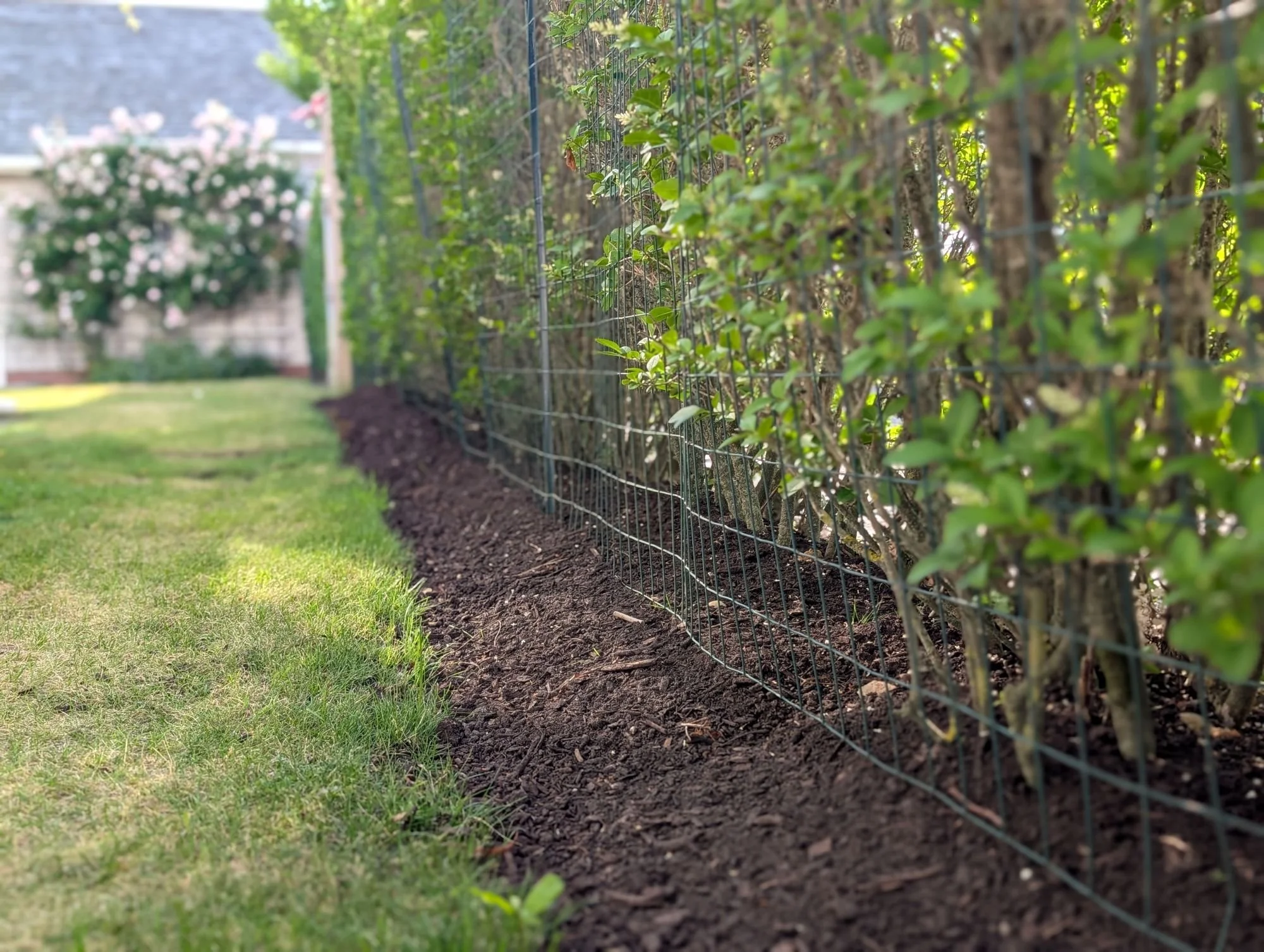
Actual photo of Nantucket Gold™ Compost used to mulch privet and garden beds at a home in Monomoy, Nantucket Island.
Aged pine mulch is the default choice for overwintering beds on Nantucket. It looks good, it's a known quantity, and it's expensive. It's also not doing the work your soil actually needs.
Pine mulch is a surface layer. It does not build soil. Aged pine mulch breaks down slowly by design; that's what makes it hold its look through a season. Slow breakdown means it's contributing very little organic matter to the soil underneath it in any given winter. It insulates roots and suppresses weeds. That's the extent of what it does, and you're paying a premium for it.
Nantucket Gold™ is a soil builder. It's made from 100% island-collected leaf and yard trimmings. Spread on a bed going into winter, it continues breaking down and feeding soil biology through the cold months, adding organic matter your plants will draw on in spring. Pine mulch covers. Nantucket Gold™ works. Native soils here are sandy, low in organic matter, and slow to hold water or nutrients. Pine mulch decomposes slowly, so it adds very little organic matter to the soil in any given season, and it isn't designed to build soil structure the way compost is. Nantucket Gold™ is: worked in or top-dressed, it adds organic matter directly, improves soil structure, and supports the microbial activity that makes sandy soil more productive. Used consistently, it does more for the soil underneath than mulch ever will.
The cost difference is real
Aged pine mulch runs at a premium, and you're paying that price every year for a product that mostly just sits there. Nantucket Gold™ is $30 per cubic yard in bulk or $5 per bag, made right here on-island. You get a lower cost per yard and a product that's actually improving your soil, not just covering it.
How to apply it
Clear spent annuals and cut back perennials as usual.
Spread a 1 to 2 inch layer of Nantucket Gold™ over the bed. Work it lightly into the top of the soil if you can, but full incorporation isn't required.
Leave it through winter. It will continue to break down and feed the soil.
By planting season, the bed will have measurably better organic matter and structure.